The Treeology of Comporta
Three Trees, Three Landscapes, One Home
A Personal Reflection on the Cork Oak, Umbrella Pine, and Olive Tree.
The trilogy of Comporta could easily describe a physical journey — starting at the tip of Tróia, passing through the heart of Comporta, and moving down onto the hills of Melides. But for me, the true Treeology of Comporta is found in my personal relationship with three distinct living anchors: the ancient cork oak, the majestic umbrella pine, and a favoured olive tree.
Each one evokes a profoundly different feeling within me, an internal landscape that I would like to share.
I. The Cork Oak
Latin Name: Quercus suber — known locally as the Sobreiro.
Oh, the Grand Old Duke of Cork,
He seeds ten thousand ‘corns.
He held them high at the top of the tree,
Then let them fly, to be free.
For once when they were up, on the tree,
Then they were down, on the ground.
And when they were joyfully floating through the air,
They were neither up nor down.
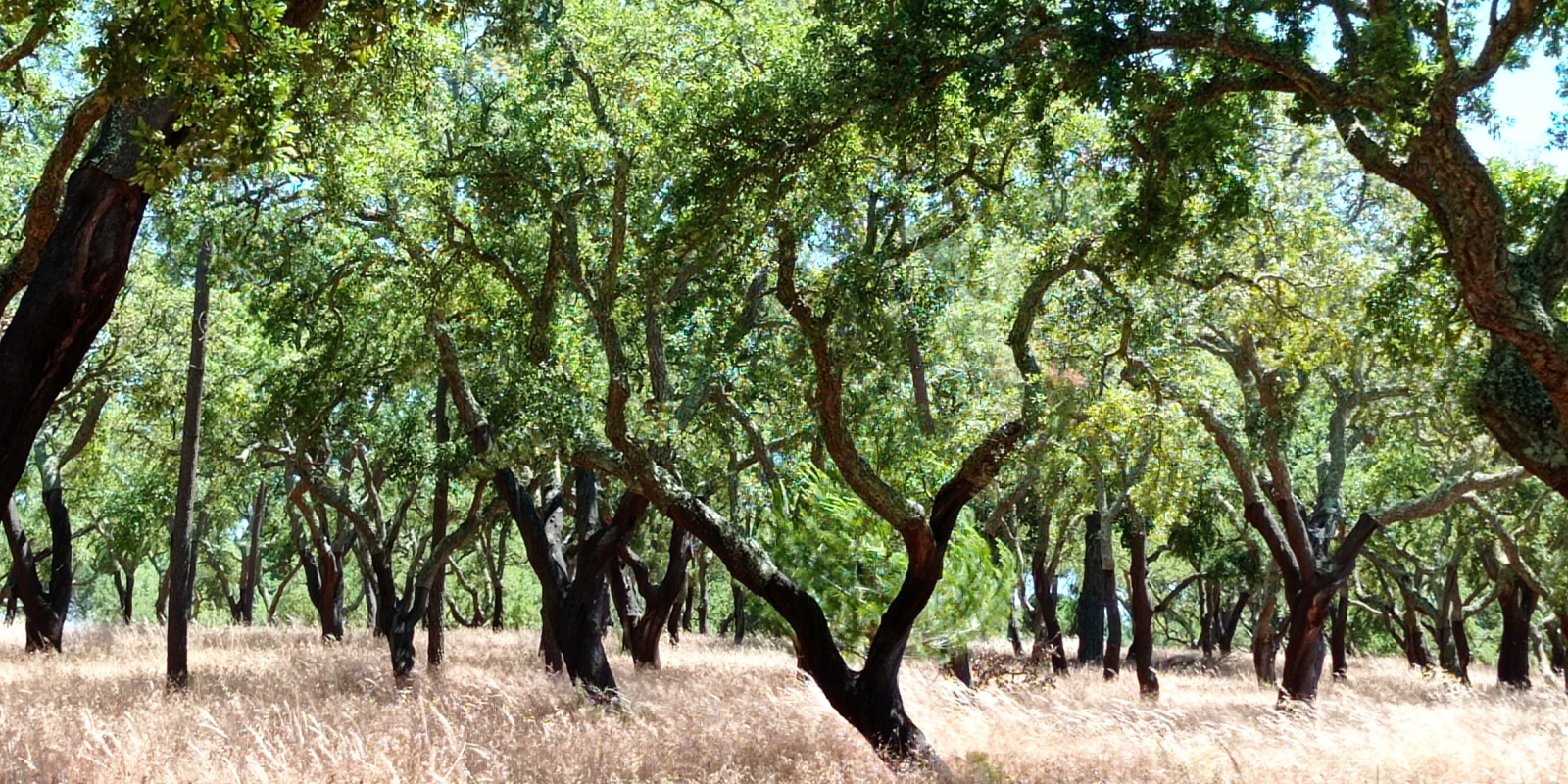
Over my last two decades of walking the forests throughout Comporta, I have remained deeply humbled by the presence of the old cork oak. Personally, and to myself, I call them “The Dukes of Cork.” Even though I walk among them silently and of slow rhythm, I always prefer to sit.
They are elegantly noble. They hand me stories of lives gone by, of those who sowed their roots, and those who have cared for them through generations.
Their physical features often turn into remarkable characters right before your eyes. I have a few on my land, and when I am near, I feel protected. An acorn drops, usually more than a few, and with that small, quiet sound, an ancient wisdom and knowledge grew.
My unfeigned words would be: find the time, sit down with these noble Dukes of Cork, and let them hug you into the self-realisation that perhaps we are one.
The Lifespan: A noble Sobreiro operates on generational time, routinely living between 150 and 250 years.
The Legal Landscape: In Portugal, the cork oak is heavily protected. It is strictly illegal to cut one down without authorisation, and even dead trees cannot be removed without state permission. Pruning requires explicit permission from the ICNF.
The Production Metric: The bark is harvested entirely by hand every nine years. A tree cannot usually be harvested until it is around 25 years old, and the truly valuable cork is rarely achieved until the third harvest, when the tree is over 40 years old.

II. The Umbrella Pine
Latin Name: Pinus pinea — known locally as the Pinheiro Manso.
Oh Pinheiro Manso, thou standest proud and tall,
And as I walk beneath you, I am totally in awe.
Your trunk so stern and straight, rise up to the cloud,
And as you widen out, my soul and heart applaud.
For me, it is not only their immense strength and fortitude within these times of shifting climate, and not just their majestic crown. While walking through these woods, what genuinely moves me is the space between them.
They always see you coming,
Offer shelter from the sun.
And if below a seed doth sprout,
They truly shade this one.
Enjoyed from afar,
And adored from within,
I am forever grateful,
That I lived not out, but in.
The Lifespan: The resilient Pinheiro Manso typically thrives for 100 to 150 years, anchoring coastal sand dunes with deep, stabilising root networks.
The Crown & Space: Its distinctive umbrella shape requires careful management. Proper thinning and crown-lifting pruning are essential in its youth to encourage upward growth and create the open canopy that allows light to filter safely to the forest floor.
The Precious Yield: This tree produces the highly prized Mediterranean pine nut, known locally as pinhão. The pine cones are carefully harvested by hand during the winter months, requiring patience as a cone takes three years to fully mature.
The Secret Life of Mux Pinea: Unlike many species that rely on separate male and female trees, the Stone Pine quietly carries both roles within a single canopy. Nature, it seems, prefers efficiency.
Each spring, small clusters of delicate pollen cones appear on the lower branches. Brief visitors, they release vast clouds of golden pollen into the coastal breeze before disappearing almost as quickly as they arrived.
Higher in the crown, a different story unfolds. Tiny female cones wait patiently to receive that pollen. At first they are small, green, and easily overlooked amongst the new growth.
Then begins one of the longest courtships in the forest.
While many pine species mature within a year or two, the Stone Pine asks for considerably more patience. Nearly three years pass before its cones reach maturity. Over time they grow larger, stronger, and woody in form, eventually protecting one of the Mediterranean’s most treasured harvests: the edible pine nut.
In a world increasingly obsessed with speed, Mux Pinea remains a quiet reminder that some of nature’s finest rewards still take years to arrive.

III. The Olive Tree
Latin Name: Olea europaea — known locally as the Oliveira.
From the moment I arrived in Alentejo, I have loved this little tree,
And not just for its beauty, but for the olive that I see.
We break the bread, and slice the cheese, and pour a glass of wine,
These lunches last forever, that’s beauty on Alentejo time.
Harvested in December, on nets around the tree,
As the olives fall to ground, you can see their happy glee.
It’s not just theirs but mine, I’m as happy as can be,
And just once more I’ll remind you, I love my olive tree.
The Lifespan: The humble Oliveira is virtually immortal, easily living for hundreds, and occasionally thousands, of years. Because of its resilient root system, mature olive trees can be uprooted, transported, and replanted as living, sculptural masterpieces on a newly designed estate.
The Open Pruning: To thrive, the olive tree requires careful, deliberate pruning every one to two years. Traditional farmers use the open-centre, or vase, method, clearing the middle branches so that the Alentejo sunlight can penetrate the core, prevent disease, and maximise the seasonal fruit yield.
The Coastal Soil: While the olive tree prefers rocky clay, it adapts remarkably well to the sandy, well-drained soils of the Comporta region, provided it receives deep, infrequent watering during its initial years.
The View from the Ground
When you walk these forests for the years that I have, you realise we do not own the land; we are simply the custodians keeping it safe. The noble Dukes of Cork, the majestic pines, and the immortal olive trees were here long before our analytical minds arrived, and will be here long after we are gone.
They are the true architects of the Alentejo.
So, when you look out across the horizon, look past the dimensions and structures. Embrace the trees. They can show you everything you need — about patience, about space, and what true “I am home” value genuinely means.
June 2026.
Ronald Wayne
Notes From The Coast & Real Estate
Previous – Discover why protecting our forests matters just as much as enjoying them.
NFTC Hub – Return to all our Notes From The Coast.
Next – A thoughtful reminder that forests provide far more than timber alone.
Explore Melides luxury real estate, including villas, private estates, land and off-market property, with independent buyer advisory on the Alentejo Coast.
Property for Sale in Melides →
Pego Beach is one of the most established beachside locations in Comporta, but is better understood as a corridor rather than a single real estate development.